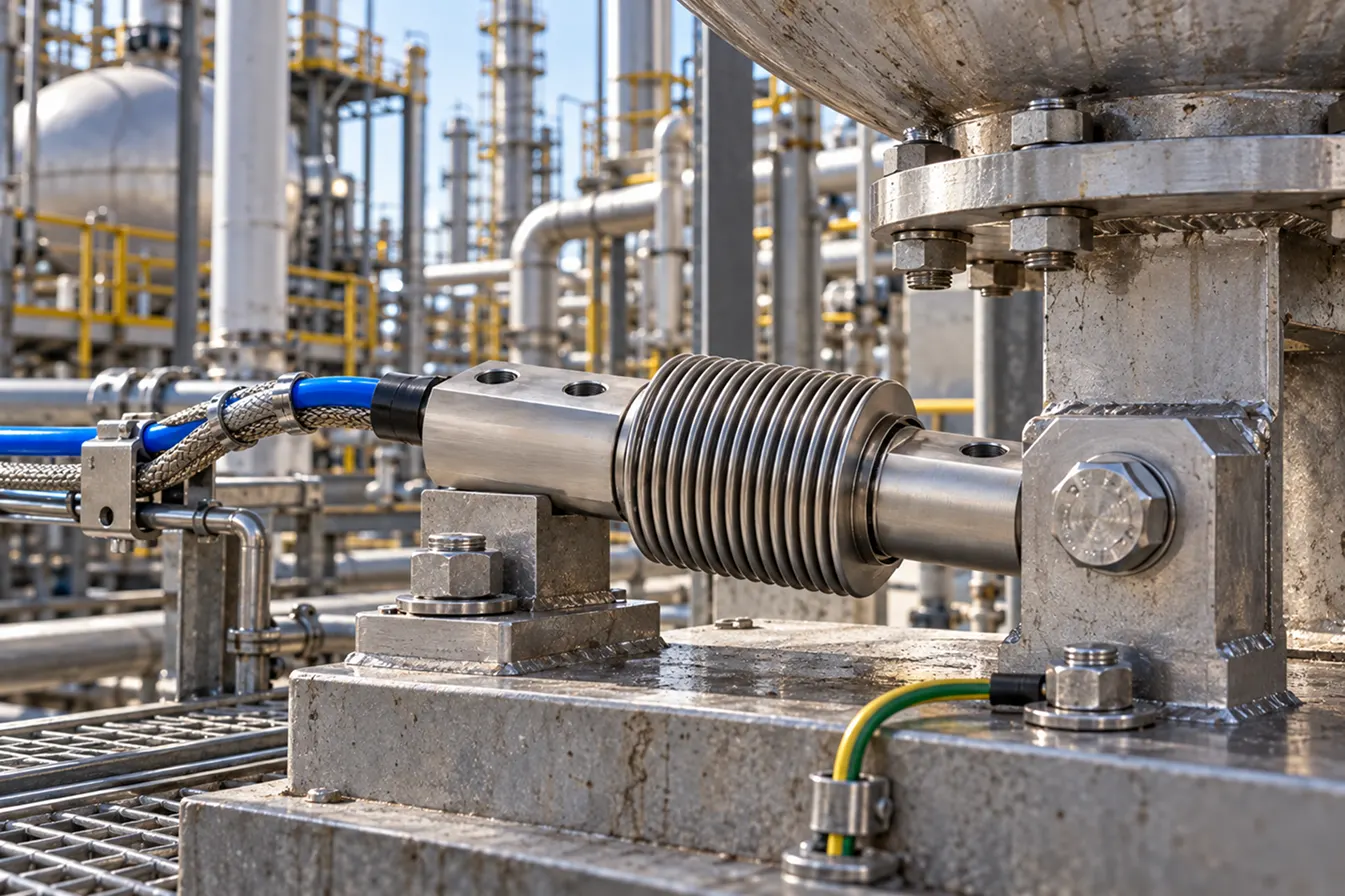
ATEX-certified Load Cells are weighing and force-measurement devices designed and certified for use in potentially explosive atmospheres. They are particularly important in industries where flammable gases, vapours, mists, or combustible dust may be present, such as oil & gas, petrochemical, pharmaceutical, chemical processing, food processing, mining, and bulk-material handling.
ATEX certification helps ensure that the load cell and its associated equipment are designed so that they do not become an ignition source under the specified hazardous-area conditions.
ATEX comes from the European Union’s requirements for equipment intended for use in potentially explosive atmospheres. Equipment is classified according to the type of hazardous environment and the level of protection required.
Typical hazardous-area classifications include:
• Zone 0: Explosive gas atmosphere is present continuously or for long periods.
• Zone 1: Explosive gas atmosphere is likely to occur during normal operation.
• Zone 2: Explosive gas atmosphere is not normally present, but may occur temporarily.
• Zone 20, 21 and 22: Corresponding zones for combustible dust.
The correct load-cell certification must therefore match the actual hazardous area, gas/dust group, temperature class, and installation requirements.
Preventing Load Cells from Becoming Ignition Sources
A conventional load cell may be perfectly suitable for a normal industrial environment but may not have the necessary protection for an explosive atmosphere.
ATEX-certified equipment is evaluated for potential ignition hazards such as:
• Electrical sparks
• Excessive surface temperature
• Electrical faults
• Static electricity
• Mechanical or other possible ignition sources
For example, a load cell installed beneath a chemical-storage vessel may continuously measure the vessel’s weight. If the surrounding atmosphere contains flammable vapour, the measurement system must be appropriately protected.
Safer Weighing in Hazardous Processes
Load cells are commonly installed in:
• Storage tanks
• Reactors
• Hoppers
• Silos
• Filling machines
• Blending systems
• Batch-processing equipment
• Conveyor weighing systems
• Force-monitoring equipment
In these applications, accurate weighing is important not only for process control but also for safety.
For example, overfilling a chemical vessel can create pressure, spillage, or vapour-release hazards. A reliable load-measurement system can provide an important input to the plant’s control and safety systems.
ATEX-certified load cells can therefore form part of a properly engineered hazardous-area weighing system.
Controlled Electrical Energy
Many hazardous-area load-cell systems use intrinsically safe (Ex i) protection concepts.
The principle is to limit electrical energy and temperature to levels that cannot ignite the specified explosive atmosphere under the applicable conditions.
A typical system may consist of:
Load Cell → Junction Box → Intrinsically Safe Barrier/Interface → Weighing Indicator/PLC
It is important to understand that an ATEX-certified load cell alone does not automatically make the entire weighing installation ATEX-compliant. Cables, junction boxes, barriers, indicators, power supplies, and installation methods may also need appropriate certification or assessment.
Reduced Risk of Explosion
The major safety benefit is the reduction of the possibility that measurement equipment could initiate an explosion. Consider a pharmaceutical powder-processing plant. Fine combustible dust may become suspended in the air.
If electrical equipment generates sufficient energy or reaches an unsuitable surface temperature, it can potentially provide an ignition source.
Using appropriately certified equipment helps control these risks when combined with proper plant design, zoning, maintenance, and operating procedures.
Reliable Operation in Harsh Industrial Conditions
Industrial load cells may be exposed to:
• Chemicals
• Moisture
• Dust
• Temperature variations
• Mechanical vibration
• Cleaning processes
• Corrosive environments
Many industrial ATEX load cells are available with robust constructions and protection levels suitable for demanding environments. Stainless-steel construction and suitable sealing can provide additional resistance against corrosion and environmental contamination, depending on the particular model.
However, IP rating and ATEX certification are different things. IP protection describes resistance to ingress of solids and liquids, whereas ATEX relates to suitability for potentially explosive atmospheres.
Compliance and Certification
ATEX-certified equipment provides documented evidence that the equipment has been assessed against applicable explosion-protection requirements.
| Parameter |
What to Check |
| ATEX marking |
Exact certification/marking |
| Hazardous zone |
Zone 0/1/2 or 20/21/22 |
| Protection concept |
Ex ia, Ex ib, Ex db, etc. |
| Gas/Dust group |
Appropriate group for the application |
| Temperature class |
Suitable T-class or maximum surface temperature |
| Ambient temperature |
Required operating range |
| IP rating |
Required environmental protection |
| Capacity |
Required weighing/force range |
| Accuracy |
Required measurement accuracy |
| Material |
Stainless steel or other suitable construction |
| Certificate |
Valid manufacturer’s/approved certification |
When selecting an ATEX load cell, verify details such as:
ATEX-certified load cells improve industrial safety by ensuring that load-measurement equipment is appropriately designed and certified for specified potentially explosive environments. They help reduce ignition risks while providing reliable force or weight measurement for tanks, silos, reactors, hoppers, and process equipment.