
Table Of Contents
Manufacturing industries are constantly looking for ways to improve productivity, reduce operational costs, and maintain consistent product quality. Accurate measurement plays a critical role in achieving these objectives, especially in processes involving weighing, force measurement, and load monitoring.
Load cells have become an essential component in modern manufacturing by providing precise weight and force measurements that help automate processes, improve quality control, and reduce human error. Whether used in assembly lines, packaging systems, industrial testing, or material handling, load cells enable manufacturers to make informed decisions based on real-time data.
In today’s era of Industry 4.0 and smart manufacturing, load cells are no longer just weighing devices. They are intelligent sensors that contribute to automation, predictive maintenance, and process optimization.
A load cell is a force transducer that converts mechanical force or weight into an electrical signal. This signal is processed by indicators or data acquisition systems to provide accurate measurements for industrial applications.
Most industrial load cells use strain gauge technology, where the electrical resistance changes when force is applied. This change is converted into highly accurate digital measurements.
Load cells are available in various types, including:
Each type is designed for specific industrial applications depending on load capacity, environmental conditions, and installation requirements.
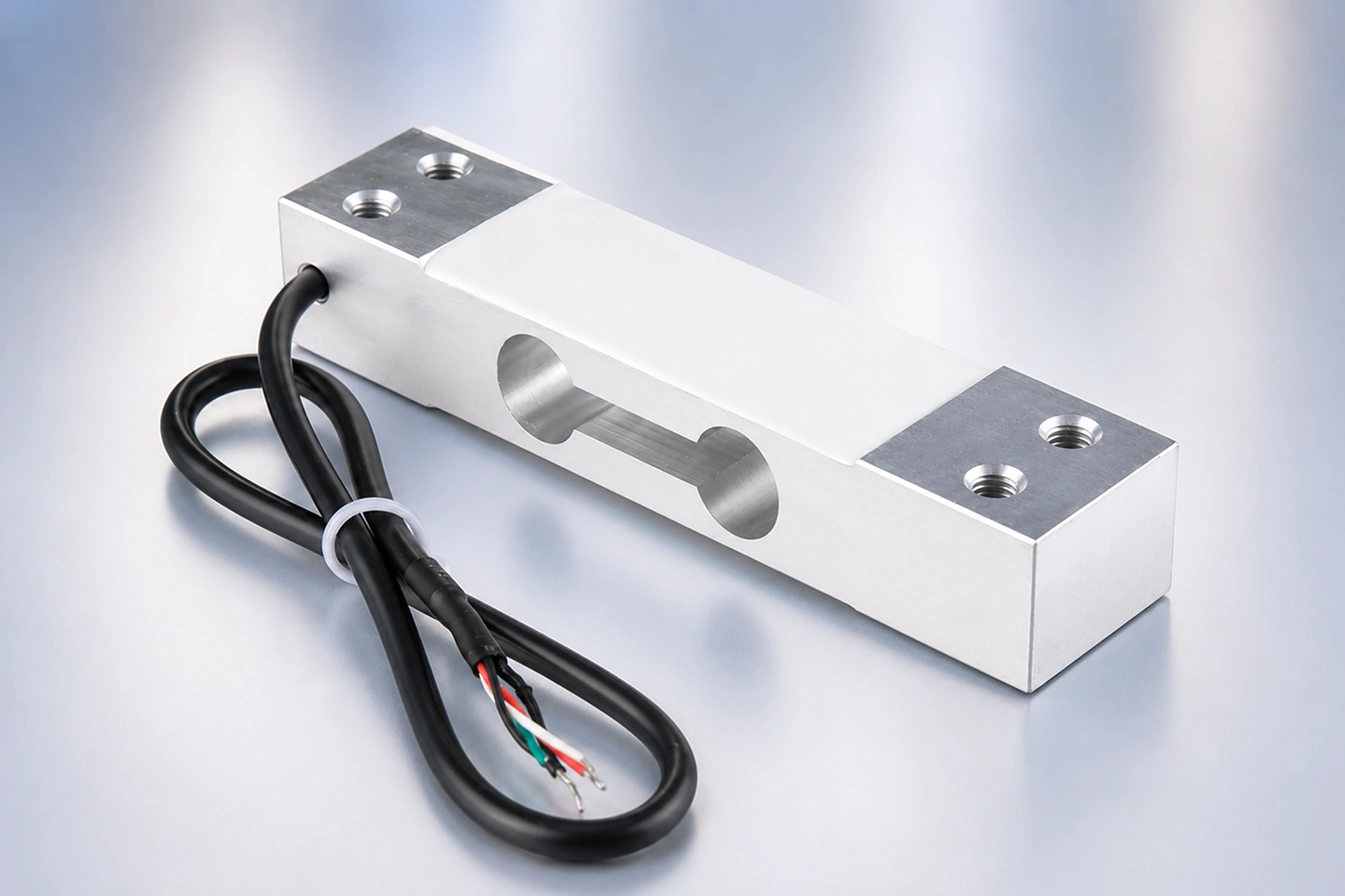
Modern manufacturing relies on precision. Even minor variations in weight or force can affect product quality, production efficiency, and operational costs.
Load cells help manufacturers:
By providing continuous and accurate measurements, load cells eliminate guesswork and enable manufacturers to maintain tighter process control.
Accurate measurement is one of the biggest advantages of using load cells.
Manufacturers can precisely measure raw materials, monitor product weight, and maintain consistency throughout production.
This helps:
Accurate data also supports compliance with industry standards and quality certifications.
Material waste directly impacts manufacturing profitability.
Load cells ensure the correct amount of material is used during production, preventing overfilling, underfilling, and unnecessary losses.
Industries such as food processing, chemicals, pharmaceuticals, and packaging benefit significantly from accurate dosing and batching systems powered by load cells.
Automation has become the foundation of modern manufacturing.
Load cells integrate seamlessly with:
This enables automatic weighing, material handling, batching, and production monitoring with minimal human intervention.
The result is faster production cycles and improved operational efficiency.
Consistent product quality is essential for maintaining customer trust.
Load cells continuously monitor product weight and force during production.
Any deviation outside predefined limits can trigger automatic alerts or stop production, allowing manufacturers to correct issues before defective products reach customers.
This significantly reduces inspection time and improves overall quality assurance.
Load cells are widely used for monitoring mechanical loads on industrial equipment.
They help manufacturers detect:
Early detection helps prevent machine failures and extends equipment life.
Instead of waiting for equipment to fail, manufacturers now use predictive maintenance strategies.
Load cells continuously collect operational data that helps maintenance teams identify abnormal loading conditions before they become critical failures.
Benefits include:
Industrial accidents often occur due to overloaded cranes, lifting systems, or machinery.
Load cells monitor load limits in real time and immediately notify operators if safe operating limits are exceeded.
This helps protect:
Safety improvements also reduce insurance costs and operational risks.
Today’s manufacturing facilities rely heavily on operational data.
Load cells generate valuable information that can be analyzed to:
Combined with industrial analytics, this data supports continuous process improvement.
Choose a sensor designed for the expected operating range.
Applications such as laboratories require much higher precision than general industrial weighing.
Consider:
Proper installation ensures maximum accuracy and long-term reliability.
Manufacturing is evolving rapidly, and load cell technology continues to advance.
Some emerging trends include:
Load cell data supports digital twins by providing real-time force and weight information for simulation and optimization.
These innovations are helping manufacturers build more intelligent, efficient, and connected production environments.
Load cells have become indispensable in modern manufacturing by delivering accurate force and weight measurements that improve productivity, enhance quality control, reduce material waste, and support automation. As manufacturers continue to adopt Industry 4.0 technologies, the role of load cells will expand further through IoT connectivity, predictive maintenance, and data-driven decision-making.
Whether you are upgrading an existing production line or building a smart manufacturing facility, choosing high-quality load measurement solutions is essential for long-term operational success.
Proact IMS provides reliable load cells, data acquisition systems, and industrial measurement solutions designed to meet the evolving needs of manufacturing, research, aerospace, automotive, and infrastructure industries. With a focus on precision, quality, and technical expertise, Proact IMS helps organizations improve efficiency, optimize performance, and achieve accurate measurement across critical applications.