
Table Of Contents
A strain gauge is a sensor used to measure the strain — or deformation — experienced by an object when subjected to an external force, pressure, or load. When a material deforms, its electrical resistance changes proportionally. The strain gauge detects this change in resistance and converts it into a measurable electrical signal.
Strain gauges are bonded directly to the surface of the component being tested, making them ideal for measuring stress in structures, machine parts, bridges, turbines, and aerospace components.
This resistance change is extremely small and is typically measured using a Wheatstone bridge circuit, which amplifies the signal to a usable level for data acquisition systems.
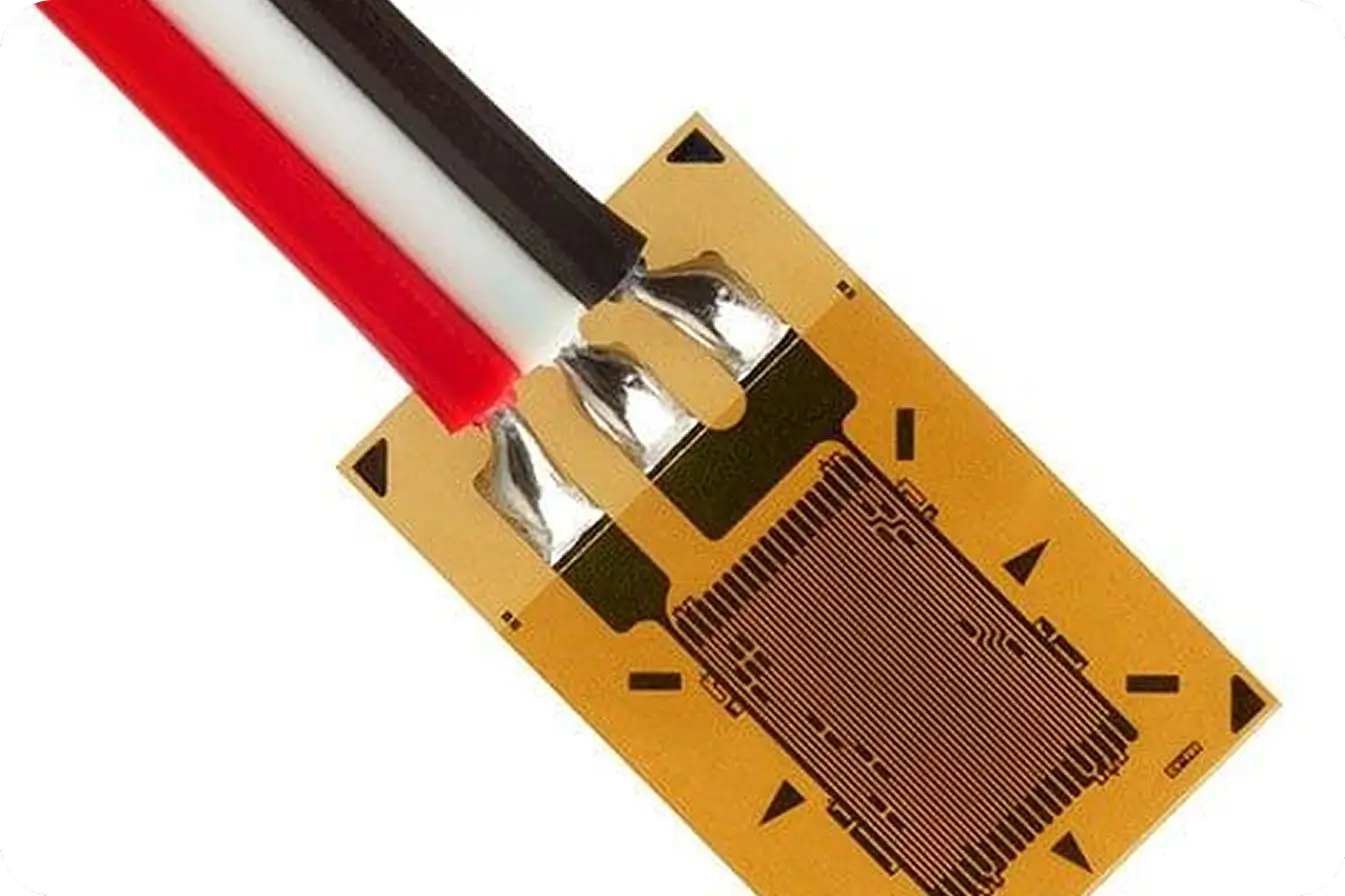
The backing (carrier) material holds the gauge grid in shape and transfers strain from the test object to the grid. Polyimide is the standard backing for most applications — it is flexible, moisture-resistant, and suitable for temperatures up to 200°C. For higher temperatures or embedment in composites, glass-fibre or epoxy phenolic backings are used.
Adhesive selection is equally critical. Cyanoacrylate adhesives are quick and easy for laboratory use, while epoxy adhesives are preferred for long-term field installations. High-temperature ceramic adhesives are used when operating above 250°C. Proact IMS provides guidance on adhesive selection based on substrate type, temperature, and installation duration.
The operating environment plays a major role in gauge selection. Consider the following before finalising your specification:
Temperature extremes — choose grid materials and backing rated beyond the expected operating range. Thermal output (apparent strain) must be managed through self-compensating gauges or software correction.
Humidity and moisture — moisture ingress degrades adhesive bonds and causes signal drift. Protective coatings (nitrile rubber, silicone, or epoxy encapsulants) are essential for outdoor or submerged applications.
Dynamic loading and fatigue — for rotating components or cyclic loading, specify gauges with rated fatigue life of 10⁷ cycles or more. Karma alloy grids generally outperform constantan in high-cycle fatigue scenarios.
Magnetic fields and EMI — in high-EMI environments such as near motors or transformers, shielded cables and proper grounding practices are essential to avoid signal noise.
Strain gauges are deployed across a wide range of industries and assets where Proact IMS operates:
Load cells and weighing systems — strain gauges bonded to structural elements form the sensing core of industrial load cells used in hoppers, conveyors, and process vessels.
Structural health monitoring — bridges, offshore platforms, wind turbine towers, and pressure vessels use embedded or surface-mounted gauges for long-term strain tracking.
Rotating machinery — torque measurement on shafts, gearboxes, and couplings is achieved using slip rings or telemetry-based strain gauge systems.
Aerospace and defence — flight load testing, fatigue analysis, and landing gear monitoring rely on high-precision foil and semiconductor gauges.
Civil and geotechnical engineering — embedded wire and vibrating-wire gauges monitor strain in soil, concrete, and rock formations over extended periods.
Choosing the right strain gauge is not a one-size-fits-all decision. It requires careful consideration of the physical quantity being measured, the material and geometry of the test object, the operating environment, the measurement duration, and the required accuracy. From gauge length and grid material to bridge configuration and adhesive compatibility — every detail matters.
At Proact IMS, our instrumentation specialists have extensive experience specifying, installing, and calibrating strain gauge systems across industries including oil and gas, power generation, heavy manufacturing, and civil infrastructure. Whether you are setting up a one-off stress analysis test or a permanent structural monitoring system, our team ensures you get the measurement solution that fits your application precisely.