


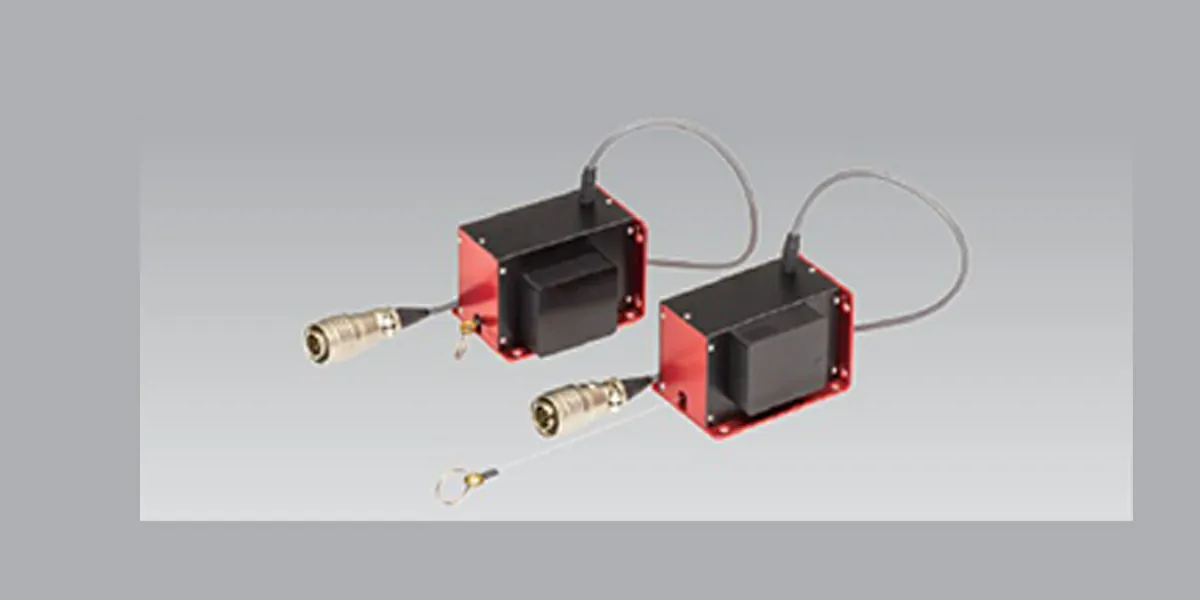
Measure Type Displacement Transducer
A TML wire-type displacement transducer (Tokyo Measuring Instruments Laboratory) is a precise sensor that measures physical movement (displacement) by unspooling a fine, kink-resistant stainless steel wire, converting the wire's extension or retraction into an electrical signal via a potentiometer, ideal for monitoring structure deformation, vibration, or material strain in research, testing, and civil engineering.
A strong, thin wire is pulled out from the transducer's body as an object moves away.
The wire is connected to a rotating part of a potentiometer (a variable resistor). As the wire pulls, the potentiometer resistance changes, creating a corresponding electrical output (voltage/signal). This electrical signal is read by data loggers or other instruments, providing accurate displacement data (e.g., elongation, vibration).
Wire Type Displacement Transducer WD-A 250mm~1000mm
Displacement transducer for measuring large displacement Measurement by pulling out a stainless wire. The wire tension remains constant regardless of displacement. A compact, lightweight, and highly precise displacement transducer.
- Protection ratings : IP 20 equivalent
-
Features
- Increased stability of measuring the displacement at low speed.
- Compact, lightweight
- Measurement of large displacement
- Constant wire tension
- Simple handling


